Pahalgam Massacre: “Operation Mahadev” claimed the life of a former Pakistani army commando
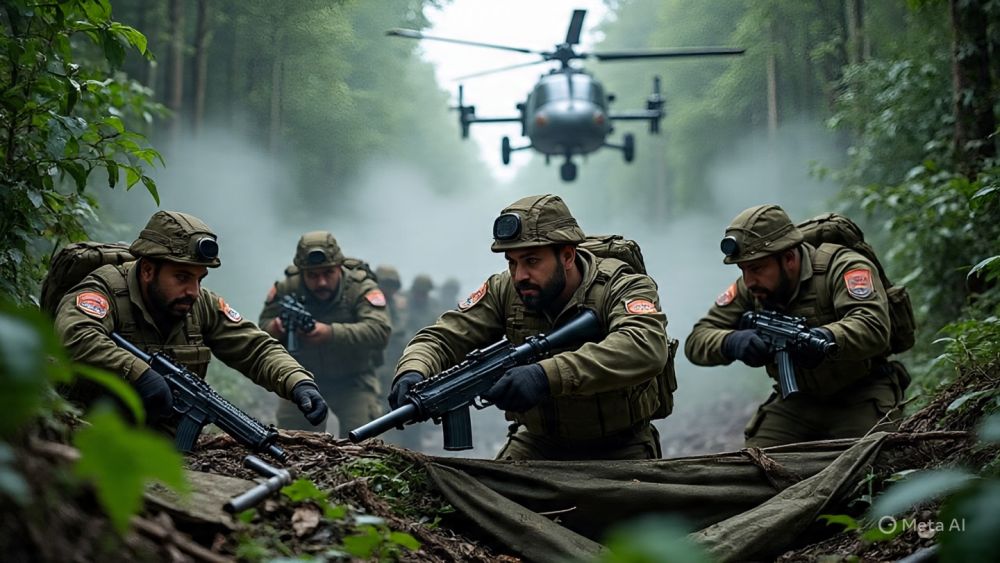
Operation Mahadev in Srinagar killed three terrorists, including Suleiman Shah, the mastermind of the Pahalgam atrocity.
At approximately 12:45 PM on Monday, the Indian Army’s Chinar Corps first declared that contact had been established with the terrorists. An hour later, they reported that the three had been killed in a fierce firefight. In homage to Lord Shiva, the mission was code-named “Operation Mahadev.”
The terrorists’ identities were not officially confirmed until late Monday night, but sources told The Daily Guardian that Suleiman Shah, the mastermind of the vicious assault on defenseless civilians in Pahalgam, was one of them.
The incident happened in Srinagar’s Harwan neighborhood, close to Dachigam National Park, around 40 kilometers away from the scene of the Pahalgam atrocity. The firefight broke out when Parliament was discussing Operation Sindoor in Delhi, India’s military response to Pakistan-based terror camps and military installations, which was initiated after Lashkar-e-Taiba (LeT) militants massacred 26 civilians in Pahalgam over 98 days ago.
Suleiman Shah was a former commando in the Pakistan Army’s prestigious Special Service Group (SSG) and a Lashkar-e-Taiba terrorist, according to sources. Later on, he joined Hafiz Saeed’s UN-designated terrorist organization.
The Jammu and Kashmir Police had offered a reward of Rs 20 lakh for any information that would result in Shah’s detention following the Pahalgam incident.
According to sources, Shah started managing terror operations in South Kashmir after sneaking into India in September 2023. He was the leader of an attack that killed seven civilians at a private company’s tunnel construction workers’ camp in October 2024. In Baramulla, he was also responsible for an incident that killed four security guards.
Shah was slain together with two other terrorists, both of whom were Pakistani citizens, however at the time this news was filed, their identities had not been verified.
A combination of technical and human intelligence was used to track down the terrorists, according to photos and videos of the hideout that were provided to this newspaper. The three were discovered sleeping beneath a plastic sheet that was fastened to trees and used as a rain cover in a densely forested region. According to sources, Shah had significantly dropped weight in comparison to the previous photos and recordings that Indian agencies had.
The group was carrying M4 Carbines, which were previously used by US forces but are currently being employed by Pakistan-backed terror groups after the U.S. military withdrew from Afghanistan in August 2021, along with a sizable cache of ammo.
Bullet wounds to the terrorists’ heads, abdomens, faces, and eye sockets suggest that they were killed in a close-quarters battle.
The three-member gang had been under surveillance for at least five days, according to the sources. On the intervening night of Sunday and Monday, they employed a highly encrypted system, the T82 Ultra Set communications device, which Indian soldiers detected at around 2 AM.
Drones provided the first images to security personnel around 7 AM, and by 10 AM, several units, including special forces commandos, had arrived at the location. All three terrorists were killed by 11:45 AM, less than 45 minutes after the initial shot was fired.
Sources claim that the killed terrorists’ “Ultra Set,” a specially designed encrypted Chinese telecom gadget known to be utilized by the Pakistan Army, was found.
Instead of depending on conventional mobile technologies like Global System for Mobile (GSM) or Code-Division Multiple Access (CDMA), the “Ultra Set” handsets combine cell phone functions with specialist radio equipment.
According to officials, each Ultra Set handset is connected to a control station located in Pakistan on the other side of the border, and the equipment uses radio waves for both message delivery and receiving. Crucially, there is no direct communication between two Ultra Sets. Rather, the byte-compressed communications are transmitted from the handset to a master server in Pakistan via Chinese satellites for additional dissemination.
According to sources, Pakistan-backed terrorists in Kashmir have been using these devices for the last 18 months.
It is important to note that Indian politicians and diplomats who had travelled to 35 countries to explain India’s stance following Operation Sindoor were questioned sharply by a number of host nations about why Indian authorities had not yet been successful in capturing the Pahalgam massacre’s perpetrators. Some of the diplomatic questioning should be resolved by Monday’s successful operation.
As discussions about Operation Mahadev continue, the focus remains on ensuring justice for the Pahalgam victims.
Operation Mahadev is not just a military endeavor; it’s a message of resilience for the people affected by the Pahalgam massacre.
Many citizens view Operation Mahadev as a crucial response to the Pahalgam tragedy.
In light of recent events, Operation Mahadev has gained prominence in the fight against terrorism.
The successful execution of Operation Mahadev has raised hopes for a safer environment in Pahalgam.
Following the Pahalgam massacre, Operation Mahadev has been a focal point for national security discussions.
Operation Mahadev demonstrates the Indian Army’s resolve to eliminate threats linked to the Pahalgam incident.
Many believe that the success of Operation Mahadev is a significant step towards combating terror in the region.
The mission, dubbed “Operation Mahadev,” aimed to bring justice in response to the Pahalgam massacre.